
Infrastructure Opportunities for Construction Companies
A source-backed workflow for finding infrastructure projects, public owners, funded recipients, primes, subcontracting routes, and supplier demand.
Quick answer
The short answer
Infrastructure opportunity intelligence is a timing problem as much as a search problem. A project can move from authorization to grant selection, obligation, design, environmental review, procurement, construction, and closeout, with different buyers and partners at each stage. Construction, engineering, specialty-trade, materials, inspection, and equipment companies need to identify the current stage, the organization that controls the next purchase, and the route they can realistically pursue. A capital plan or historical award is useful evidence, but it is not automatically an open bid.
Key takeaways
- Track project stage, funding status, public owner, delivery model, and procurement route separately.
- A grant recipient can become a buyer target only after the recipient and implementation need are verified.
- Large projects may create prime, subcontractor, supplier, professional-service, and monitoring motions at different times.
- Preserve official project and procurement links so every row can be revalidated before action.
Read the funding stage before calling it pipeline
Infrastructure announcements use terms that sound interchangeable but are not. Enacted authority, available funding, announced selections, obligations, and outlays describe different stages. DOT's IIJA funding-status page explains that grant agreements can obligate funds in phases such as design, pre-construction, and construction. A selection can reveal a future public owner or recipient, while an obligation can strengthen the evidence that implementation is moving. Neither replaces the recipient's procurement process.
Build each row around stage and date. Record the program, project, recipient, location, announced amount when official, obligation status when available, project phase, delivery context, and source date. Then find the local capital page, board record, project website, vendor portal, or solicitation that controls the next commercial action.
Do not turn every infrastructure dollar into contractor revenue. Funds can support planning, right-of-way, administration, vehicles, equipment, professional services, or construction, and project scopes change. The source must support the need your company can fulfill.
Search across owner, procurement, and award evidence
SAM.gov captures federal contract opportunities and some federally managed work. State departments of transportation, cities, counties, transit agencies, utilities, airports, ports, school districts, and public authorities often procure through their own portals. The practical search set therefore combines federal notices with official owner procurement pages and capital plans.
USAspending can show prior federal contracts and financial-assistance recipients. Use it to map agencies, primes, recipients, award descriptions, and places of performance. Keep historical awards in a market-evidence lane until a current forecast, project page, recipient procurement, or active notice supports a live action.
DOT's Build America project and funding resources can reveal programs, eligible public entities, selected recipients, and project-development activity. An award to a city or authority may create future professional-service or construction demand, but the next action is to locate the official recipient implementation record, not to contact the grant program as though it were the construction buyer.
Choose the route: prime, subcontractor, supplier, or adviser
Sell to Agency fits a company capable of pursuing the public owner's procurement. Channel / Distributor Motion fits material suppliers, equipment vendors, specialty trades, and service firms whose practical customer is a prime, construction manager, concessionaire, or contract-vehicle holder. Partner with Recipient can fit design, planning, community-engagement, or technical partners when the recipient controls a documented partner process.
Small-business subcontracting plans can create a formal route on qualifying federal contracts. SBA explains that certain large prime contracts require plans describing how small businesses will be used, and its SUBNet resource can list subcontracting opportunities. Treat this as a research path, not evidence that any prime must select a particular supplier.
Match the contact path to the stage: contracting office for a solicitation; public works, capital delivery, facilities, or procurement for owner research; prime supplier-diversity or subcontracting office for a validated prime route; and the recipient's project or procurement office after a grant selection. Avoid generic outreach to elected officials when an official process governs the purchase.
Qualify capacity and compliance before pursuit
A relevant project can still be a poor fit. Check geography, bonding, insurance, licensing, safety record, labor requirements, schedule, equipment, workforce, past performance, delivery method, and capacity. Federal financial assistance may also carry domestic-preference requirements. The Build America, Buy America framework applies to covered infrastructure projects and can affect iron, steel, manufactured products, and construction materials.
The action table should state which conditions are confirmed, unknown, or disqualifying. Do not imply certification, small-business status, bonding capacity, or domestic-content compliance that has not been verified. If a company can perform only a defined package, describe that package precisely rather than claiming general project fit.
Timing is equally important. A project in planning may justify monitoring or relationship research. A bid due in days may be unrealistic for a new entrant. A recent award to a prime may justify supplier research if scope and onboarding routes are public. Qualification should produce an honest next step, including 'do not pursue.'
Build the infrastructure action row
Record source, retrieval date, project and program, public owner or recipient, location, funding and project stage, scope evidence, likely package, delivery model when known, procurement portal, revenue motion, contact route, next action, owner, due date, and disqualifier. Link the money-flow source and the source that controls procurement when they are different.
Illustrative example: DOT announces a planning grant to a transit authority. That is not a construction bid. The row is Research Only or Monitor Policy, the target is the authority, and the next action is to follow its board, capital-program, consultant-procurement, and project pages for a supported planning or design requirement. No procurement or award outcome is assumed.
Illustrative example: an official owner portal posts a solicitation for a bridge rehabilitation package. A qualified contractor may use Sell to Agency; a specialty coatings supplier may use Channel / Distributor Motion and research plan holders or the eventual prime. The same project produces different targets and contact paths because the companies occupy different delivery roles.
Run a weekly infrastructure signal review
Start with a narrow geography, asset class, and service package. Review official capital plans and project pages for demand forming, funding selections and obligations for recipient evidence, owner portals for active procurement, and award records for primes and incumbents. Keep those lanes separate in the table.
At each review, recheck status and dates, attach new procurement evidence, and advance only rows with a credible commercial route. Assign monitoring dates to early projects instead of leaving them in active pipeline. Remove stale records when the project, funding, geography, package, or capacity no longer fits.
Opportunity Scanner can organize sources into an action table, but it does not establish contractor responsibility, licensing, funding availability, bid responsiveness, or award probability. Those decisions remain with the official owner and procurement documents.
Infrastructure opportunity qualification checklist
- 1Identify the official owner, recipient, project, location, and asset class.
- 2Label funding as announced, obligated, outlaid, or unknown using the source's terminology.
- 3Confirm the current project phase and the scope your company could perform.
- 4Find the owner or recipient procurement page that controls commercial action.
- 5Choose Sell to Agency, Channel / Distributor Motion, Partner with Recipient, Monitor Policy, or Research Only.
- 6Check licensing, bonding, insurance, labor, domestic-preference, schedule, and capacity conditions.
- 7Use official contracting, project, procurement, or prime-subcontracting routes.
- 8Assign one owner, next action, due date or monitoring date, and disqualifier.
- 9Keep capital plans, awards, and funding selections out of the active-bid count until procurement evidence exists.
Charts and visual evidence
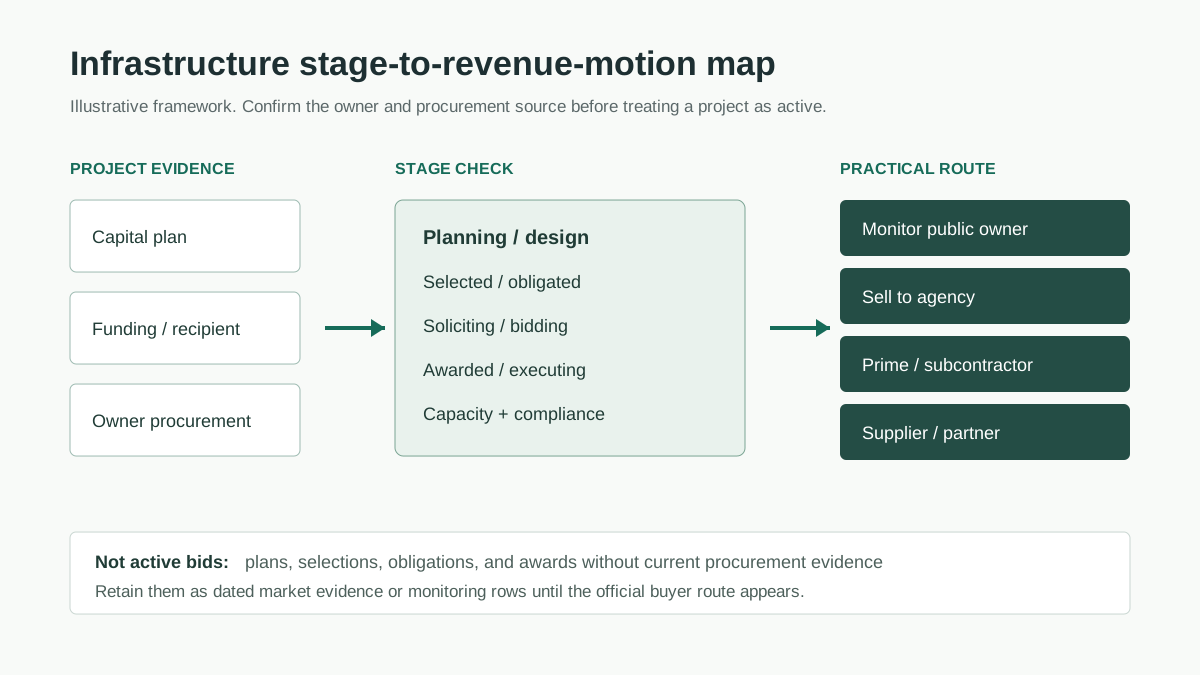
Infrastructure stage-to-revenue-motion map
Project planning, funding, procurement, and award stages create different targets; only procurement evidence belongs in an active bid lane.
Open visual full sizeIllustrative framework; stages and procurement routes vary by project and owner. Source: Illustrative Opportunity Scanner framework based on DOT funding-stage definitions, SAM.gov, USAspending.gov, and recipient procurement paths
Sources cited
Put this into the product
Run a free scan to map your construction, engineering, trade, material, or equipment capabilities to source-backed infrastructure action rows.
Opportunity Scanner classifies the evidence, opens the official route, and lets you start a pursuit with an owner, fit decision, next step, internal due date, and notes.
Scan Your Company WebsiteKeep exploring
Related reads
Industry Guides
Clean Energy Public-Sector Opportunities
How clean-energy and facilities companies can distinguish grants, rebates, procurement, policy, funded buyers, and implementation routes.
7 min read
Industry Guides
Manufacturing and Supply Chain Public-Sector Demand
A practical source-to-action guide for manufacturers, suppliers, logistics providers, and industrial service companies pursuing public-sector demand.
7 min read
Industry Guides
Nonprofit and Community Services Funding Opportunities
A practical guide to separating direct grants, government contracts, funded providers, recipient partnerships, and community-service market evidence.
7 min read