
Clean Energy Public-Sector Opportunities
How clean-energy and facilities companies can distinguish grants, rebates, procurement, policy, funded buyers, and implementation routes.
Quick answer
The short answer
Clean-energy demand is distributed across agencies, states, Tribes, utilities, schools, housing organizations, public facilities, manufacturers, and community programs. The source may be a procurement, grant, rebate, tax-credit mechanism, loan, rule, award, or facilities plan. Those records do not create the same commercial action. A credible pipeline identifies who controls implementation, whether the company can apply or must sell or partner, and what official step can move the opportunity forward.
Key takeaways
- Label the mechanism and status before assigning a revenue motion.
- State, Tribal, utility, and recipient implementation pages often matter more than the original federal announcement.
- Policy and program context should create monitoring tasks until a buyer, recipient, or procurement route is verified.
- Qualification must include installation, workforce, consumer-protection, domestic-content, and program-specific conditions.
Separate the mechanisms that move clean-energy money
DOE's infrastructure funding resources distinguish grants, cooperative agreements, rebates, tax credits, loans, prizes, notices of intent, requests for information, and selections. Start every row with the mechanism and status. An open funding opportunity may support Direct Apply for an eligible entity. A state rebate program may create contractor or equipment demand. A selection may identify a recipient. A closed notice remains context, not current pipeline.
Elective pay is another distinct mechanism. DOE explains that certain tax-exempt and governmental entities can receive payments for qualifying clean-energy tax credits when they meet the underlying requirements. That can make public entities, public utilities, schools, universities, hospitals, and Tribes useful project-research targets, but eligibility for a tax mechanism is not evidence that a specific project or procurement exists.
Keep the original federal source and the implementation source together. A federal program page explains authority and broad conditions; a state energy office, utility, public owner, recipient, or procurement portal may control current availability, contractor participation, project timing, and purchasing.
Turn program evidence into the correct target
Direct Apply fits only when the company is an eligible applicant and the official notice supports its project. Sell to Agency fits a public facilities or procurement route. Sell to Funded Buyer fits a verified recipient that plausibly needs equipment, software, engineering, installation, measurement, workforce, or compliance support. Partner with Recipient fits a complementary role supported by the program and recipient process.
Channel / Distributor Motion can fit manufacturers, distributors, installers, energy-service companies, and engineering partners when another entity holds the customer relationship or contract. Monitor Policy fits building rules, program guidance, rate cases, rebate design, or standards that may shape demand but do not yet identify a purchase.
An illustrative example: a state is officially funded to administer rebates. The source identifies a future implementation ecosystem, not a sale to every household or agency in the state. A software vendor might monitor program administration procurements; a contractor might follow the state's approved-contractor process; an equipment supplier might research eligible-product and distributor rules. No enrollment, sale, or award is assumed.
Find demand at facilities and funded organizations
Public buildings, schools, housing authorities, water systems, transit facilities, and community organizations can become buyers when capital plans, awards, audits, resilience plans, or procurements identify a supported need. Search official facilities plans and procurement pages alongside DOE, EPA, Grants.gov, and USAspending records.
EPA's current Greenhouse Gas Reduction Fund page says the program's statutory authority was repealed, remaining funds were rescinded, and previously announced implementation was terminated. That makes older program and award records historical context, not an active source of buyer demand. This is exactly why policy and program status must be rechecked before outreach.
USAspending can add historical award and recipient evidence. Use it to understand which agencies and organizations have received relevant assistance or contracts, while keeping obligations separate from current budgets and active opportunities. The implementation source must still support the next action.
Qualify implementation, not just technology fit
A clean-energy solution can match a program theme and still fail operationally. Check geography, eligible buildings or customers, approved measures, licensing, contractor enrollment, wage and labor conditions, domestic-content rules, measurement requirements, consumer protections, data access, interconnection, and project schedule.
DOE's Home Energy Rebates resources make implementation responsibility visible: states, territories, and Tribes manage programs, and program requirements address consumer protection and quality installation. The useful commercial question is not simply whether rebates exist. It is which jurisdiction is operating, what participation rules apply, and which buyer or channel controls the work.
Policy status must also be current. Rules can be stayed, revised, litigated, or superseded. Preserve the publication and effective dates, official status page, and next review date. Use Monitor Policy when the commercial impact depends on future implementation rather than presenting the rule as guaranteed demand.
Build the clean-energy action row
Record the official source, retrieval date, mechanism, status, program administrator, applicant or recipient, geography, technology or facility scope, implementation conditions, target, revenue motion, contact path, next action, owner, timing, and disqualifier. Include both the program source and the local implementation or procurement source when available.
Illustrative example: a housing authority publishes an energy-upgrade procurement tied to a supported capital program. An engineering firm may use Sell to Agency; an equipment maker may use Channel / Distributor Motion through bidders or the selected implementer. The contact route is the authority's official procurement process, and the next action is to review scope, schedule, standards, and submission instructions.
Illustrative example: a DOE page lists a closed funding opportunity and later selections. The closed notice is not active. The selected-recipient record may create Sell to Funded Buyer research only after the recipient's project, role, geography, and vendor need are verified through current official material.
Operate a clean-energy monitoring cadence
Choose a narrow offer and geography. Monitor federal program and award pages for context, state and Tribal implementation pages for current rules, public-owner and utility portals for procurement or enrollment, USAspending for recipient evidence, and Federal Register pages for policy status. Label every source lane.
Promote a row only when the mechanism is current, the target is verified, the company can meet conditions, and one official next action exists. Set review dates for announced or policy-stage signals. Remove closed, superseded, out-of-geography, or operationally impossible records instead of leaving them in active pipeline.
Opportunity Scanner can connect the evidence to a revenue motion and contact path. It does not guarantee program continuity, eligibility, rebate availability, approved-contractor status, procurement, project economics, or an award.
Clean-energy signal qualification checklist
- 1Name the mechanism: procurement, grant, cooperative agreement, rebate, credit, loan, award, policy, or planning record.
- 2Confirm current status, dates, administrator, geography, and eligible entities.
- 3Find the state, Tribal, utility, recipient, or public-owner implementation source.
- 4Choose Direct Apply, Sell to Agency, Sell to Funded Buyer, Partner with Recipient, Channel / Distributor Motion, Monitor Policy, or Research Only.
- 5Check approved measures, installation rules, licensing, labor, domestic-content, data, and consumer-protection conditions.
- 6Preserve official program and procurement or enrollment links.
- 7Assign one target, contact route, owner, next action, and review date.
- 8Reject closed, superseded, unsupported, or geographically irrelevant records.
- 9Keep policy, awards, and program context out of the active-opportunity count until implementation evidence exists.
Charts and visual evidence
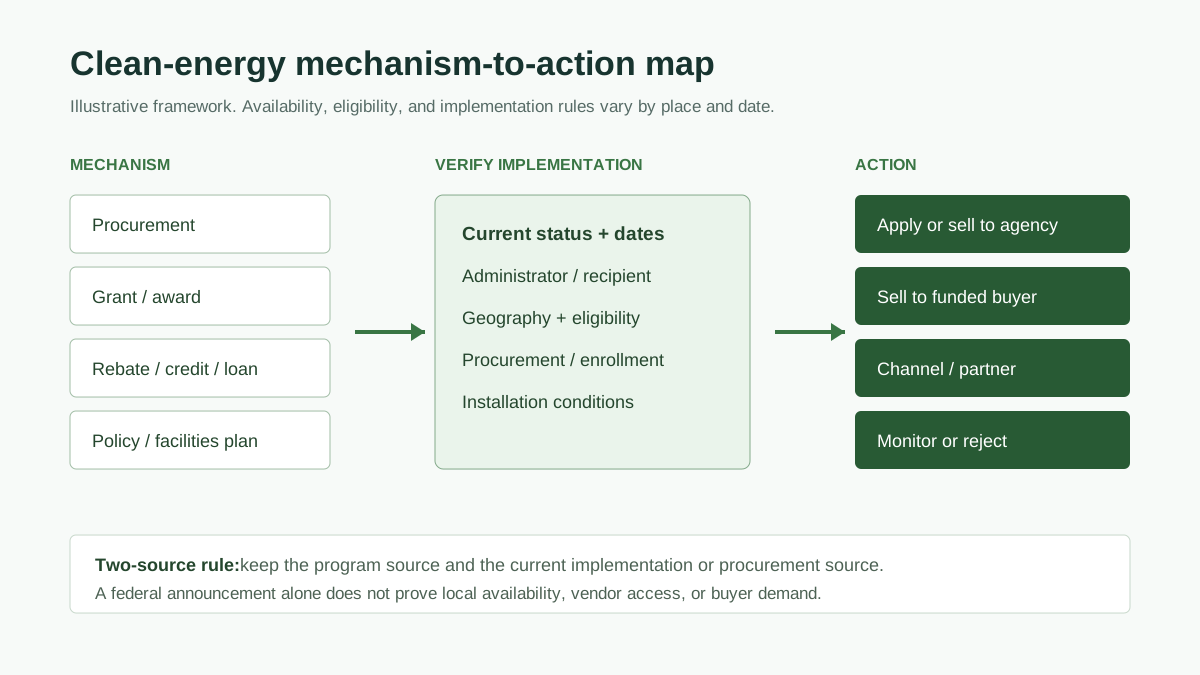
Clean-energy mechanism-to-action map
A grant, rebate, procurement, award, and policy record require different targets and cannot share one generic sales action.
Open visual full sizeIllustrative framework; program availability and implementation rules vary by jurisdiction and date. Source: Illustrative Opportunity Scanner framework based on DOE, EPA, Grants.gov, USAspending.gov, and public-owner implementation sources
Sources cited
Put this into the product
Run a free scan to turn your clean-energy, facilities, or sustainability offer into qualified program, buyer, channel, and monitoring actions.
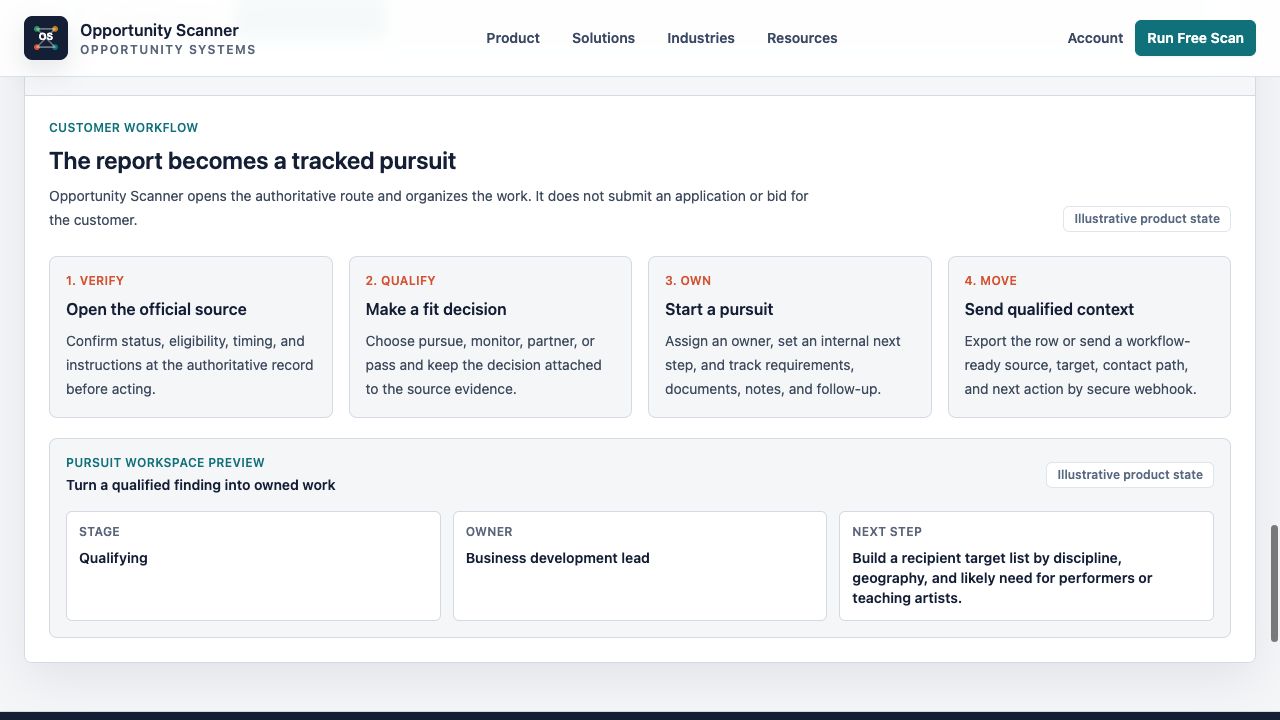
Opportunity Scanner classifies the evidence, opens the official route, and lets you start a pursuit with an owner, fit decision, next step, internal due date, and notes.
Scan Your Company WebsiteKeep exploring
Related reads
Industry Guides
Infrastructure Opportunities for Construction Companies
A source-backed workflow for finding infrastructure projects, public owners, funded recipients, primes, subcontracting routes, and supplier demand.
7 min read
Industry Guides
Manufacturing and Supply Chain Public-Sector Demand
A practical source-to-action guide for manufacturers, suppliers, logistics providers, and industrial service companies pursuing public-sector demand.
7 min read
Industry Guides
Nonprofit and Community Services Funding Opportunities
A practical guide to separating direct grants, government contracts, funded providers, recipient partnerships, and community-service market evidence.
7 min read